
Introduction
Have you ever felt confused about brightness specifications when buying an LED screen? Why are some screens still clear in the sun, while some look dazzling indoors? This answer is hidden in the difference between Candela vs Lumen. Understanding these two key parameters will not only help you choose the right LED screen, but also avoid visual fatigue or blurred picture problems caused by improper brightness.
What Is Candela?
Candela (cd) is a key parameter when purchasing an LED display. It measures the luminous intensity of the light source in a specific direction and belongs to the photometric unit. Simply put, Candela is like a beam of a flashlight. The more focused the light, the higher the Candela value.
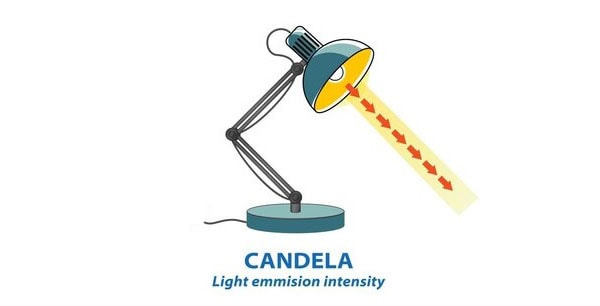
What is Candela
Common Applications:
- Outdoor LED Screens: High Candela value (e.g., 6,000 cd/m² or more) is required to resist direct sunlight and ensure that the picture is clearly visible.
- Stage LED Displays: Need focused brightness to prevent scattered light from disrupting the audience’s viewing experience.
Technical Insights:
Candela is closely related to the screen’s viewing angle:
- Narrow viewing angles (e.g., 120°) typically have higher Candela values, making them ideal for long-distance viewing.
- Wide viewing angles (e.g., 160°) are better suited for close-up viewing as they spread light evenly.
What Is Lumen?
Lumens (lm) measure the total visible light emitted by a light source, which belongs to the unit of luminous flux. Simply put, lumens are like the total brightness of all light bulbs in a room, regardless of the direction of the light.

What is Lumen
Common Applications:
- Indoor Meeting Room Screens: Require high lumen values (e.g., 1,500–2,500 lm/m²) to ensure uniform brightness without dark spots or overly bright areas.
- Cinema LED Screens: Use lower lumen values (e.g., under 500 lm/m²) to suit dim environments and avoid dazzling the audience.
Technical Insights:
Lumens are closely related to the screen’s luminous efficiency (Luminous Efficacy, unit: lm/W).
High-efficiency LED screens can not only provide higher lumen values, but also significantly reduce energy consumption, making them suitable for long-term operation scenarios.
Candela vs Lumen: Key Differences
| Parameter | Measurement Focus | Primary Impact | Typical Use Cases |
| Candela | Directional light intensity | Local brightness, glare resistance | Outdoor advertising, stadiums |
| Lumen | Total light output | Uniform overall lighting | Indoor meetings, retail displays |
From the table above, it’s clear that Candela and Lumen serve different purposes. Candela excels in scenarios requiring focused brightness (e.g., outdoor advertising), while Lumen is better for uniform lighting (e.g., indoor meetings).When selecting an LED screen, these two parameters need to be considered comprehensively based on actual needs.
How to Choose the Right LED Screen Based on Candela vs Lumen
Step 1: Determine the Usage Environment
- Outdoor Applications: Preferred LED screens with high Candela value (≥6000 cd/m²) to prevent glare and combine reasonable lumen values (such as 3000-5000 lm/m²) to achieve energy saving effects.
Example:A stadium installed LED screens with a Candela value of 8,000 cd/m², ensuring clear visibility even under midday sunlight. - Indoor Applications: Choose an LED screen with moderate lumen values (such as 1500-2500 lm/m²) to avoid excessive brightness of the screen and ensure color uniformity.
Example: A meeting room used alumen value of 2,000 lm/m² LED screen, ensuring the participants can clearly see the content from any angle.
Step 2: Combining Screen Size and Resolution
High-Density small-pitch screens (e.g., P2.5): Lumen demand is lower, but high Candela value (≥5000 cd/m²) is required to ensure local clarity.
Example: A retail store has installed a P2.5 small-pitch screen with lumens value of 1500 lm/m² and Candela value of 5000 cd/m². The picture is still clear and delicate when viewed from close range.
Step 3: Follow Industry Standards
You can select brightness parameters according to industry standards, for example:
- Traffic Displays: Candela value ≥8,000 cd/m².
- Retail Displays: Lumen value 2,000–3,000 lm/m².
These standards can help you quickly determine the appropriate brightness configuration and avoid display problems caused by inappropriate parameters.
Candela vs Lumen: Actual Case Analysis
Example 1: Outdoor Stadium LED Screens
When you need to install LED screens for outdoor stadiums, the first thing you need to consider is whether the screen is bright enough to fight direct sunlight, ensuring that the audience can clearly watch the game in any lighting conditions.
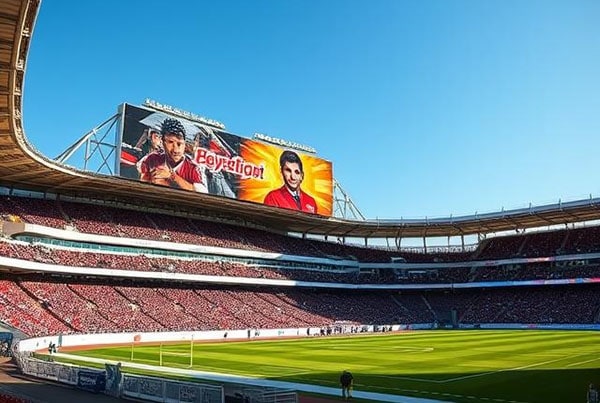
Outdoor Stadium LED Screens
- Solution:
Choose high Candela screens (≥6,000 cd/m²).
Use narrow viewing angles to concentrate light and reduce light scattering.
- Recommended Products:
Eco Series: Designed for outdoor use with Candela values above 6,000 cd/m².
Eco Pro Series: Offers energy-efficient designs for long-term outdoor uses.
Example 2: Indoor Meeting Room LED Screens
When you need to install LED screens for indoor conference rooms, the requirements are very different from outdoor screens. The indoor environment pays more attention to whether participants can clearly see the content from different angles, so the choice of lumen value is crucial.
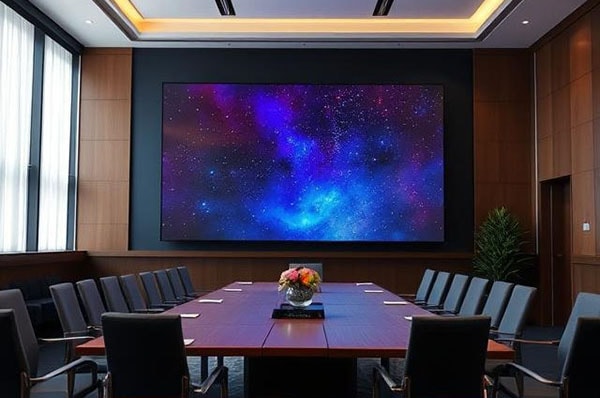
Indoor Meeting Room LED Screens
- Solution:
Use moderate lumen levels (about 2,000 lm/m²).
Choose wide viewing angles (e.g., 160°) for even light distribution.
- Recommended Products:
InFiSlim Series: Ultra-slim design with smart dimming and wide-angle capabilities for premium meetings.
Common Misconceptions About Candela vs Lumen
Misconception 1: Higher Lumen Means Better Screens
Reality: While higher lumen values indicate brighter screens, they can cause discomfort in dark environments. For example, a meeting room using 4,000 lm/m² screens caused eye strain among attendees.
Solution: According to international display standards (such as ISO 9241-307), the lumen value of the conference room LED screen is recommended to be controlled between 1500-2500 lm/m² to ensure a comfortable viewing experience. For dark light environments such as cinemas, the lumen value must be less than 500 lm/m².
Misconception 2: Candela Is Only for Outdoor Screens
Reality: Candela also matters for certain indoor applications, such as stadiums or large conference halls.
Misconception 3: Candela and Lumen Can Replace Each Other
Reality: Candela and Lumen measure completely different properties and cannot replace each other. For example, a company chose a screen with a high lumen (5000 lm/m²) but a low Candela (3000 cd/m²) for outdoor advertising screens, and the screen content is still blurred in the sun.
Solution: Outdoor screens need to pay attention to both Candela and lumens, and high Candela values (≥6000 cd/m²) are preferred to combat sunlight interference.
Misconception 4: Are Brightness Parameters the Only Important Factor When Choosing an LED Screen?
Reality: Brightness parameters like candela and lumen are essential, but they’re not the only factors to consider. Resolution, refresh rate, and color uniformity are equally important.
Misconception 5: Do High Candela or Lumen Values Mean Higher Energy Consumption?
Reality: Modern LED technology has greatly improved energy efficiency, and high brightness does not necessarily mean high energy consumption. You can choose an energy-efficient (lm/W) LED screen to ensure brightness while reducing energy consumption.
Misconception 6: Does Higher Brightness Mean Longer Screen Lifespan?
Reality: Brightness levels do not directly determine the lifespan of an LED screen. In fact, overly high brightness can accelerate LED aging.
Technology Trends and Future Developments
Trend 1: High Dynamic Range (HDR) Technology
The HDR screen can achieve high Candela value and high lumens at the same time, effectively improving picture details and contrast.
Trend 2: Intelligent Dimming Technology
Through the ambient light sensor, the LED screen can automatically adjust the Candela and lumen values for the best viewing experience.
Trend 3: Energy-saving and efficient LED
While improving Candela and lumens, the new generation of LED chips reduces energy consumption by more than 50%.
Conclusion
Through the above misunderstandings and cases, it can be seen that the choice of Candela and Lumen needs to combine specific scenarios and needs, and cannot blindly pursue high parameters. By understanding these parameters and following industry standards, you can find the perfect LED screen for any scenario.
If you still have questions about the brightness configuration of LED screens, contact our expert team immediately to get a customized brightness configuration solution for free!
Related Articles You May Like:
Mini LED Vs OLED: Which Is Better In 2024?
Why Does Color Accuracy Matter In LED Screens?