
Introduction
When planning an LED screen project, many people hesitate between HD and FHD—and for good reason. While both are common display resolutions, the difference between them can significantly affect image clarity, viewing comfort, screen size limits, and overall project cost.
So, is FHD really worth the upgrade, or can HD still deliver acceptable image quality for your specific viewing distance and screen size?
In this guide, we’ll clearly break down FHD vs HD in real-world LED display scenarios. Whether you’re installing a digital billboard, a church LED wall, or a conference room screen, this comparison will help you choose the right resolution without overspending—or compromising visual quality.
What is HD (High Definition)?
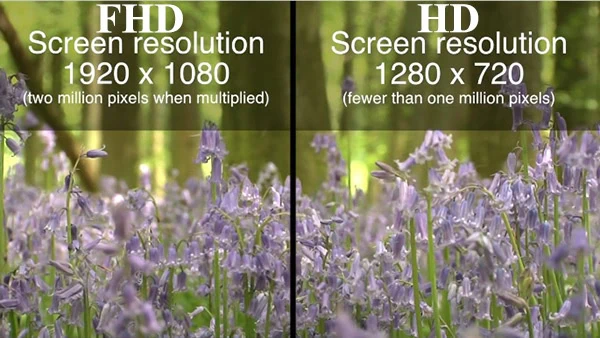
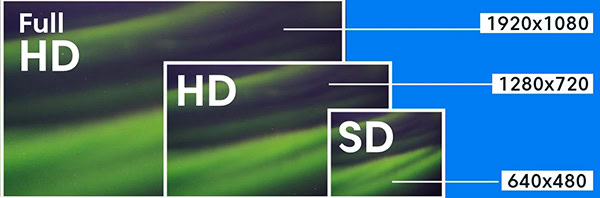
HD, short for High Definition, usually refers to a screen resolution of 1280 × 720 pixels, also known as 720p. When it was first introduced, HD marked a major improvement over older SD (Standard Definition) 480p displays, delivering clearer images, sharper text, and smoother video playback. However, with today’s higher-resolution content standards, HD is now considered an entry-level resolution rather than a premium option.
In the world of LED displays, HD is often used for mid-sized screens where audiences are not too close, such as small event stages, outdoor signs, or entry-level indoor LED displays.
- Fun fact:
1280 pixels horizontally × 720 pixels vertically = 921,600 pixels total.
While HD is still considered “high-definition,” in today’s market, it is now seen as the entry-level standard.
What is FHD (Full High Definition)?
FHD, or Full High Definition, upgrades the resolution to 1920 x 1080 pixels — often called 1080p. This gives you about 2.07 million pixels, more than twice the pixel count of standard HD!
1920 × 1080 = 2,073,600 pixels total.
With FHD, images appear much sharper, fine details are visible, and motion look smoother. In fact, FHD is now the baseline resolution for most modern screens, including TVs, monitors, smartphones, and professional LED displays. This shift makes FHD the most practical and future-proof choice for many LED display projects today.
In LED applications, FHD is ideal for:
- Large indoor LED walls (like shopping malls, conference centers, corporate lobbies)
- Stages and auditoriums
- Control rooms and command centers
FHD vs HD: Key Differences
Once you understand the basic definitions, the real question becomes how HD and FHD perform differently in real use. Below, we compare them across four key factors that matter most for LED screens: image clarity, viewing distance, cost, and content compatibility.
Pixel Count and Image Clarity
Firstly, the biggest difference between HD and FHD is the number of pixels.
| Resolution | Pixel Dimensions | Total Pixels |
| HD | 1280 × 720 | 921,600 pixels |
| FHD | 1920 × 1080 | 2,073,600 pixels |
Result:
- FHD provides over twice the detail compared to HD.
- This results in noticeably clearer images, sharper text, and cleaner fine details.
Especially for larger screens or closer viewing distances, FHD is a game-changer.
Viewing Distance and Screen Size
Secondly, viewing distance is crucial when deciding between HD vs FHD.
- If the audience is close to the screen (like within 3–5 meters), FHD is recommended to prevent visible pixelation.
- For farther viewing distances (10 meters or more), HD might still look acceptable, especially for outdoor LED screens.
Similarly, the bigger the screen size, the more important higher resolution becomes.
A 6m × 3m LED screen running HD resolution may look slightly blurry, while the same screen with FHD will appear much clearer.
LED Screen Costs
Well, LED screen costs is undoubtedly one of the most important factors when choosing between FHD and HD. It’s no surprise that higher resolution usually means higher costs. In real projects, the cost difference is not only about hardware, but also about installation precision, control system requirements, and long-term maintenance.
- FHD LED screens require smaller pixel pitch (like P2.5, P2.9), meaning more LED chips are packed into every square meter.
- HD LED screens can use larger pixel pitch (like P4, P5), which is cheaper to manufacture.
On average, an FHD screen might cost 20–40% more than a comparable HD screen of the same size. However, the investment often pays off if image quality is a priority for your project.
Content Compatibility
Last but not least, most modern content is created for FHD resolution or higher. If your screen can only handle HD, you may need to downscale your videos and graphics, which can cause a loss in quality.
With FHD, you’re ready for:
- Full HD videos (common on YouTube, Netflix, marketing videos)
- High-resolutionpresentations
- Livestreams and broadcasts
Comparison Table: FHD vs HD
This comparison clearly shows why resolution choice plays such a critical role in LED screen performance.
| Feature | HD (720p) | FHD (1080p) |
| Resolution | 1280 × 720 | 1920 × 1080 |
| Total Pixels | 921,600 | 2,073,600 |
| Image Quality | Good | Excellent |
| Viewing Distance | Farther (8–10m+) | Closer (3–5m) |
| LED Pixel Pitch | P4, P5, P6 and above | P1.9, P2.5, P2.9 |
| Typical Use Cases | Outdoor billboards, event stages | Indoor displays, control rooms |
For LED display systems, matching the screen resolution with native content also helps reduce scaling workload on video processors and control systems, resulting in more stable and accurate image output.
Beyond FHD: A Quick Look at QHD and UHD
While HD vs FHD covers the basics, some projects demand even higher resolution.
- QHD (Quad HD) = 2560 × 1440 pixels (4x 720p)
- UHD (Ultra HD / 4K) = 3840 × 2160 pixels (4x 1080p)
Both QHD and UHD offer stunning detail, especially for massive LED screens or ultra-premium indoor installations. However, they require even tighter pixel pitches (like P1.5, P1.2), making them significantly more expensive. For most commercial LED screen needs, FHD strikes the best balance between quality and cost.
(Stay tuned — we’ll cover QHD vs UHD more deeply in another article!)
Choosing the Right LED Screen Resolution: Quick Tips
Now we understand the difference between FHD and HD, it’s time to give you some useful tips. When choosing between FHD and HD for your LED project, here are a few quick guidelines:
- Audience Distance: If viewers are within 5 meters, go for FHD.
- Screen Size: The larger the screen, the more you need FHD to maintain sharpness.
- Content Quality: If you’re showing high-definition videos, FHD is a must.
- Budget: HD can save money, but make sure it won’t hurt the viewing experience.
Example:
Imagine setting up an LED wall in a conference room where people sit only 3 meters away. If you pick an HD screen, the pixelation will be visible and distracting. But with FHD, the image will look clean and professional — perfect for presentations or livestreams.
Last updated: January 2026
Conclusion: FHD vs HD — Which One Fits Your Project?
So after all these differences we mentioned above, choosing between FHD vs HD ultimately depends on your project needs.
- If budget is tight and your audience is far away, HD might be enough.
- But if you want the best image quality, smoother content display, and future-proof compatibility, Full HD is absolutely worth it.
At the end of the day, an LED screen is a long-term investment. Picking the right resolution ensures you deliver a stunning experience that will impress your audience for years to come. From a long-term perspective, choosing the right resolution upfront can also reduce future upgrade costs and ensure better compatibility with evolving content formats.
So if you need help choosing the right LED display resolution, contact us today for a free consultation — our experts are ready to help!
FAQ: FHD vs HD Common Questions
1.Is FHD the same as 1080p?
Yes! FHD and 1080p both refer to a resolution of 1920 × 1080 pixels.
2.Can HD screens display FHD content?
Technically yes, but the content will be downscaled, losing some sharpness and detail.
3.Is FHD enough for an LED wall?
In most cases, yes. FHD offers excellent clarity for medium to large LED displays where audiences are relatively close.
4.Why are FHD LED screens more expensive than HD?
Because they require more LEDs (higher pixel density) and more precise manufacturing processes, which increases cost.
5.Should I future-proof my project by choosing FHD?
If your budget allows, definitely. FHD ensures your screen can handle modern content formats for many years.
Related Articles You May Like:
What Is Pixel Density? An In-depth Guide
Pixel Pitch vs Resolution: What’s the Difference?
Which Pixel Pitch LED Display Suits For Your Project?
Aspect Ratio Of LED Display Screens: An In-Depth Guide
What Is LED Display Resolution And Why Does It Matter?
How Does Color Depth Affect The Image Quality Of LED Displays?