
Finding a Practical Indoor LED Screen for an Advertising Space
The project started with a simple idea: the customer wanted to make better use of an indoor space for advertising.
At first, the plan was to install a larger LED screen. YUCHIP prepared the rendering and quotation based on the customer’s original requirements. But after reviewing the project budget, the larger screen was no longer the most practical option.
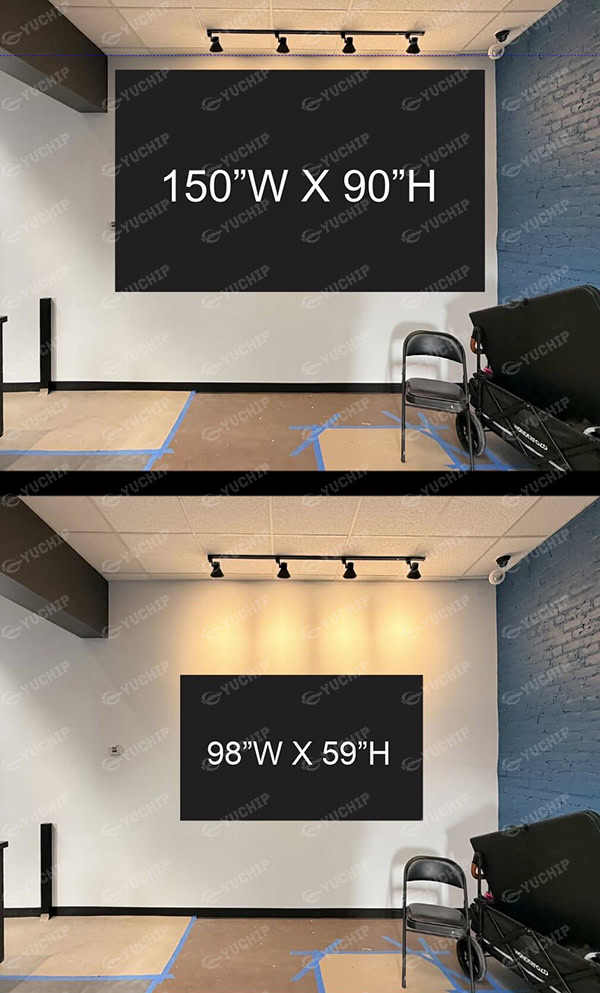
Instead of giving up on the project, the screen size was adjusted to 2.5 × 1.5 m. The customer still wanted a fine-pitch display that could deliver clear content at a relatively close viewing distance, so P1.56 remained the preferred pixel pitch.
The final choice was an InFiSlim Pro Series P1.56 indoor GOB LED screen. It gave the customer a more manageable screen size while keeping the fine image detail, slim design, and protection needed for the application.
The Final Solution: A P1.56 InFiSlim Pro GOB LED Screen
For the project in Massachusetts, USA, YUCHIP supplied a 2.5 × 1.5 m P1.56 indoor LED screen for advertising.
The main project details were:
| Project Item | Details |
| Location | Massachusetts, USA |
| Application | Indoor Advertising |
| LED Series | InFiSlim Pro Series |
| Pixel Pitch | P1.56 |
| LED Technology | GOB |
| Screen Size | 2.5 × 1.5 m |
| Screen Thickness | 33 mm |
| Screen + Back Frame Thickness | 43 mm |
| Maintenance | Front Maintenance |
The customer needed more than a screen with a small pixel pitch. The display also had to fit the available space, look clean after installation, remain easy to maintain, and stay within the revised project budget.
The InFiSlim Pro Series was a good fit for these requirements.
33 mm Thin: Keeping the Indoor Installation Compact
Space was one of the main considerations.
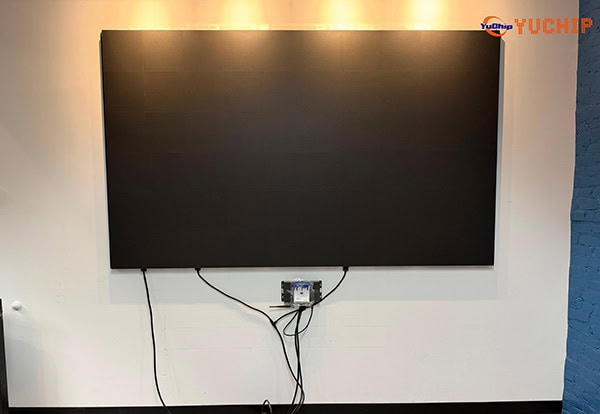
The InFiSlim Pro Series cabinet is only 33 mm thick. YUCHIP also provided a customized back frame for this project. Once the screen was mounted onto the frame, the total thickness of the finished installation was only 43 mm.
This allowed the display to sit close to the wall without making the indoor space feel unnecessarily crowded.
For an advertising display, that slim profile also helped maintain a cleaner appearance. The customer could make effective use of the available wall space without having a large, bulky structure projecting into the room.
In this project, the 33 mm thickness was therefore more than a specification. It directly helped solve the customer’s installation requirements.
A Custom Back Frame Made the Installation Easier
The customized back frame was designed to simplify the physical installation.
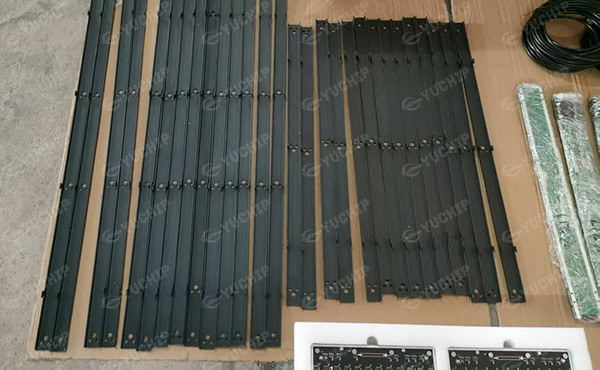
The basic process was straightforward: secure the back frame first, then hang the LED cabinets onto the prepared structure.
But, as with many real installation projects, the process did not go perfectly on the first attempt.
Catching a Back-Frame Mistake Early
At the beginning of the installation, the customer installed the left and right sections of the back frame in the wrong orientation.
YUCHIP noticed the issue and contacted the customer before the installation progressed further. We explained how the two sections should be positioned, allowing the customer to correct the mistake and continue with the cabinet installation.
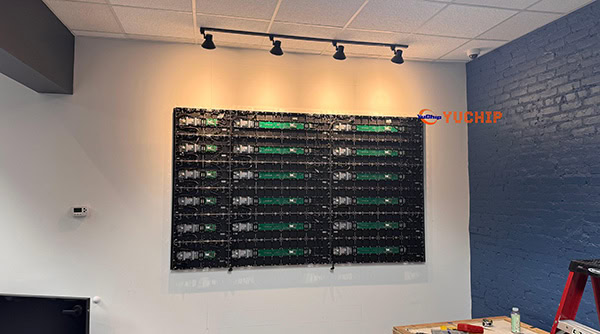
It was a small issue, but catching it early prevented it from creating a larger problem later.
For an overseas LED screen installation, timely communication like this can make the difference between a quick adjustment and a much longer delay.
Getting the Screen Online
Once the LED cabinets were mounted, the next step was connecting the display system.
The customer initially found that the screen was not displaying a signal. After checking the setup with YUCHIP, the cause was simple: the signal cable had not yet been connected.
YUCHIP guided the customer through the connection process and helped confirm that the signal path was set up correctly.
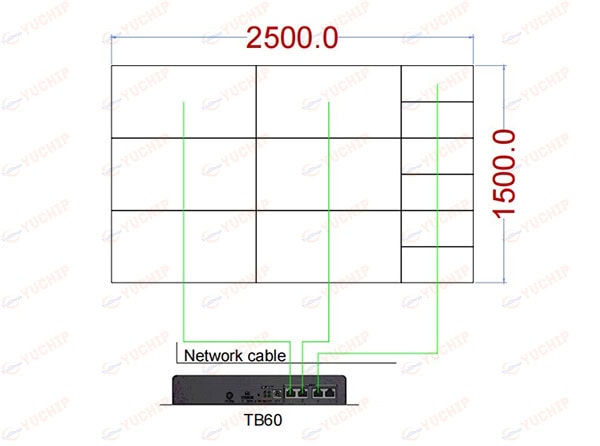
Once the connection was completed, the screen could move on to commissioning.
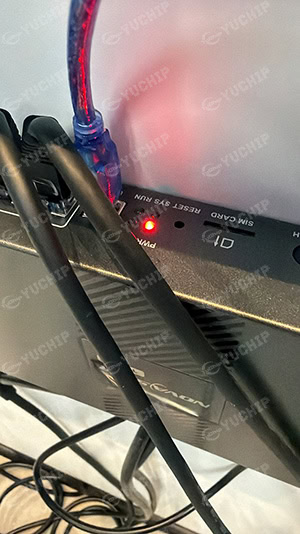
It was a small issue, but it is also the kind of problem that can leave an otherwise completed LED installation without an image. Having technical support available during the installation helped the customer resolve it without unnecessary delay.
When the Modules Were Installed the Wrong Way
There was another challenge during the installation.
While mounting the LED modules, the customer accidentally installed several modules in the wrong direction. One HUB board was also damaged because of improper operation during the process.
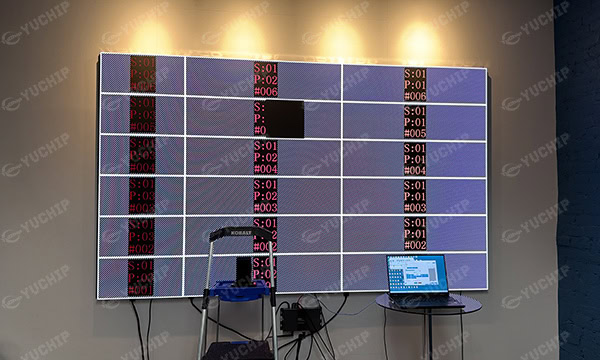
Fortunately, spare parts had already been prepared for the project.
The customer was able to replace the damaged HUB board with the supplied spare and continue the installation. YUCHIP also helped the customer identify the correct module orientation so the remaining modules could be installed properly.
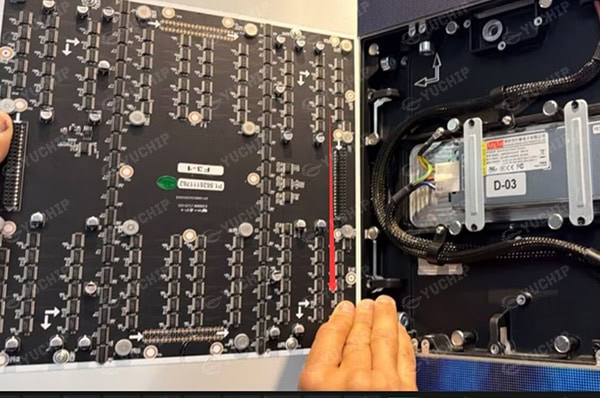
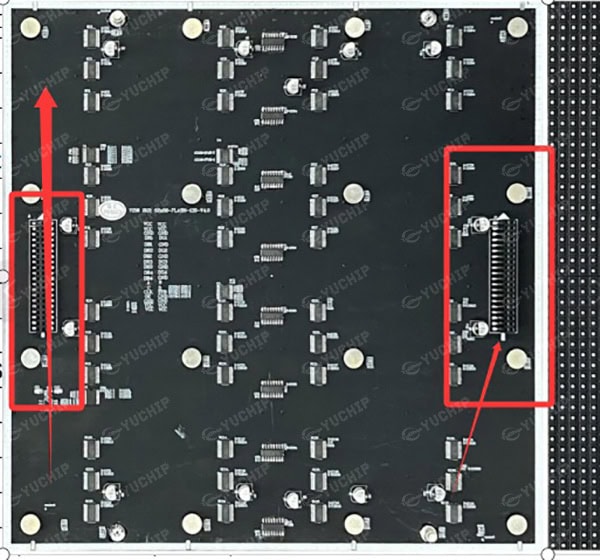
Because the required spare part was already available, the customer did not have to stop the project and wait for another HUB board to be shipped.
Customer Feedback
“YUCHIP prepared the spare parts very well, and that was a big help for us. We were able to solve the problem in a very short time. During the installation, the YUCHIP team was also always responsive and patient whenever we had questions. Their support helped us a lot.”
— YUCHIP Customer, Massachusetts, USA
This was particularly valuable for an overseas project. When an unexpected component issue happens during installation, having the right spare parts available can help keep the project moving.
Why the Customer Chose GOB for This Indoor LED Screen
The customer selected the GOB version of the InFiSlim Pro Series because the screen would be used for indoor advertising, where accidental contact and everyday spills could happen.
The GOB surface provides additional protection for the LED components. If water or coffee gets onto the display surface, it can be wiped clean. The encapsulation also helps protect the LED components from accidental contact during everyday use.
For this project, GOB was therefore a practical choice for everyday protection rather than simply an additional technical feature.
Why P1.56 Was Suitable for Close-Range Viewing
Pixel pitch was another important part of the final decision.
The screen was being installed indoors, where people could view the advertising content from a relatively short distance. A P1.56 indoor LED screen provides a dense pixel structure, helping keep text, images, and other advertising content clear when viewed up close.
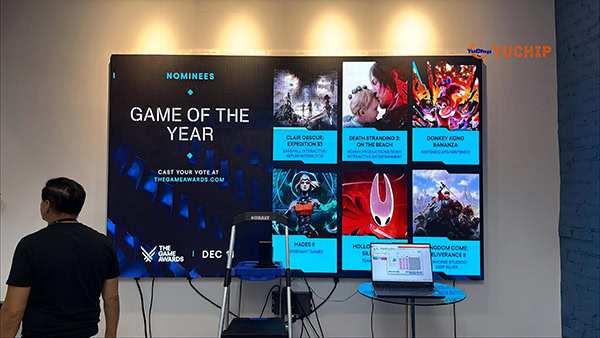
The customer therefore did not need to reduce the pixel pitch simply to lower the cost. Instead, the physical screen size was adjusted to meet the available budget while keeping P1.56 for the intended viewing distance.
The final solution balanced the customer’s budget, available space, and viewing distance without sacrificing the fine-pitch display quality needed for indoor advertising.
Front Maintenance for Easier Future Service
The slim installation also made front maintenance an important advantage.
The InFiSlim Pro Series is designed for full front maintenance, so technicians can access the LED modules directly from the front without removing the cabinets. A vacuum suction tool can be used when a module needs to be removed or replaced.
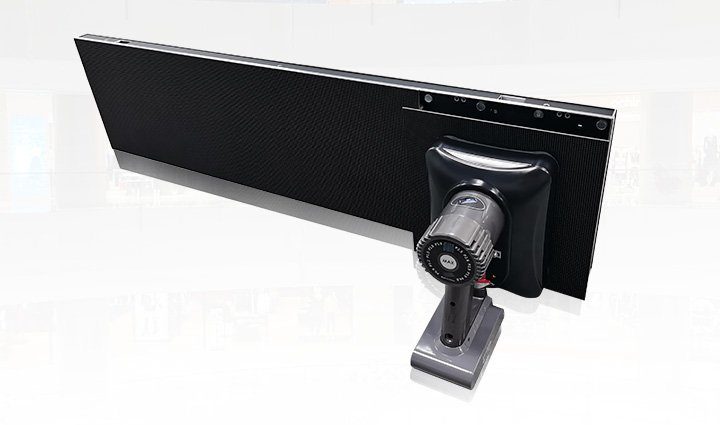
Since the finished screen and back frame were only 43 mm thick, keeping maintenance access at the front made the overall installation more practical.
There is no need to leave a large service area behind the display, and future module replacement can be handled directly from the viewing side.
The Completed Indoor Advertising Display in Massachusetts
After the installation issues were resolved and the signal connection was completed, the customer had a 2.5 × 1.5 m P1.56 indoor GOB LED screen ready for advertising use.
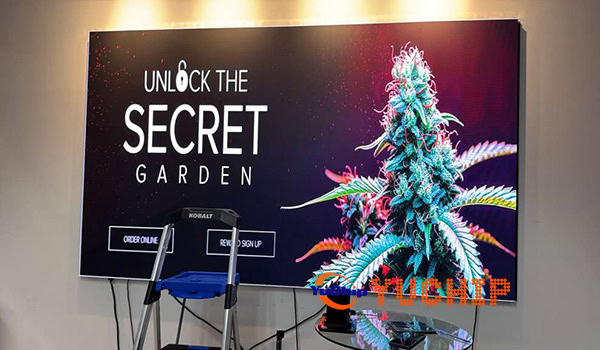
The 33 mm screen body and customized back frame resulted in a total thickness of only 43 mm. The fine P1.56 pixel pitch provides the image detail needed for close-range indoor viewing, while GOB adds protection for everyday use.
More importantly, the installation continued without the early challenges turning into major delays. The back-frame orientation was corrected, the signal connection was completed, incorrectly installed modules were addressed, and the damaged HUB board was replaced using the prepared spare.
Looking Ahead: A Potential Transparent LED Screen Project
The cooperation may not end with this indoor LED screen.
YUCHIP is currently discussing a potential transparent LED screen project with the same customer. The application is still under discussion, so no final product has been confirmed yet.
If the project moves forward, YUCHIP will continue to develop the display solution around the customer’s space and application requirements.
Conclusion
This Massachusetts project shows that choosing an indoor LED screen is not only about finding the right specifications. The final solution also needs to fit the available space, viewing distance, installation method, and budget.
For this customer, the InFiSlim Pro provided a compact fine-pitch display, while the customized back frame and front-maintenance design made the installation more practical. GOB protection was also a sensible choice for an indoor advertising application.
Just as importantly, timely technical support and prepared spare parts helped the customer keep the installation moving when unexpected issues came up.
The result was not simply a delivered LED screen, but a completed advertising display that matched the customer’s actual project requirements.
Planning an indoor LED screen project in the U.S.? Contact YUCHIP to discuss your screen size, pixel pitch, installation method, viewing distance, and project budget.