
Introduction
Display technology has advanced quickly in recent years. Among the many choices available today, IPS (In-Plane Switching) panels and OLED (Organic Light-Emitting Diodes) stand out as two of the most popular. IPS vs OLED, people compare them when shopping for monitors, TVs, or LED displays, because both have strengths that appeal to different users.
But which one should you choose—IPS or OLED? In this guide, we’ll explain their differences, explain how each technology works, and help you decide based on your needs.
What is IPS (In-Plane Switching)?
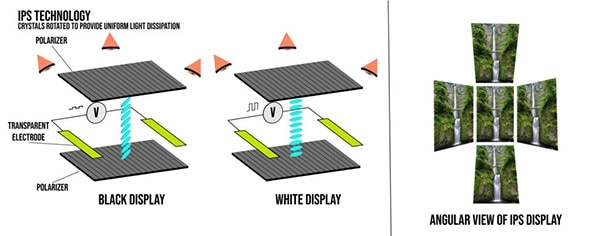
IPS is one of the most widely used LCD panel technologies, designed to solve the limitations of older TN panels. In IPS displays, liquid crystals are arranged in a parallel structure, which allows light to pass more evenly through the screen.
This design gives IPS panels accurate colors and consistent brightness across wide viewing angles, making them popular for professional work, everyday monitors, and even digital signage. However, because IPS panels rely on a backlight, they cannot achieve the same deep blacks or ultra-fast response times as OLED.
What is OLED (Organic Light-Emitting Diode)?
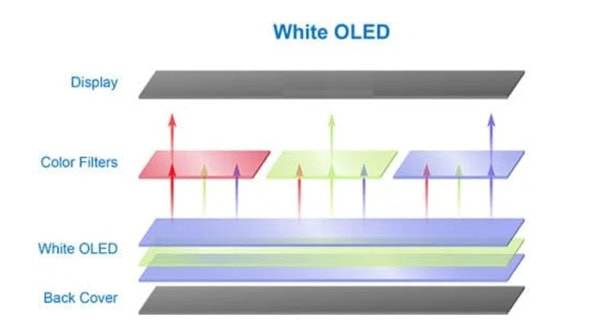
OLED takes a completely different approach. Instead of using a backlight, each pixel in an OLED panel is an individual light source. This means pixels can be turned on or off independently, resulting in true blacks and an infinite contrast ratio.
The technology also allows for thin, lightweight displays with extremely fast response times, which is why OLED is favored in premium TVs, gaming monitors, and high-end indoor LED displays. The trade-offs are that OLED panels are usually more expensive and may suffer from burn-in if static content is displayed for too long.
IPS vs OLED: Key Differences
When comparing IPS vs OLED, it helps to look at their technical differences in detail. While both are excellent, they approach display performance in completely different ways. Here’s a breakdown of the most important factors:
Contrast & Black Levels
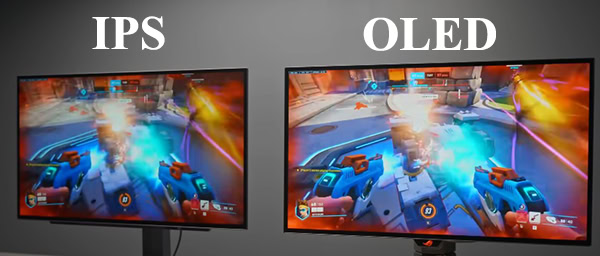
OLED delivers true blacks by turning off individual pixels, achieving an “infinite” contrast ratio. IPS relies on a backlight, so dark areas look more gray than black, especially in dim environments.
Color Reproduction
IPS panels offer stable and accurate colors across the screen, ideal for professional work. OLED produces richer and more vibrant colors, which look great for movies and gaming, though calibration may be needed for precision tasks.
Brightness Performance
IPS panels typically achieve higher peak brightness compared to OLED, especially in well-lit rooms or outdoor signage. OLED brightness has improved over the years, but under strong ambient light conditions, IPS still holds the advantage.
Response Time & Refresh Rate
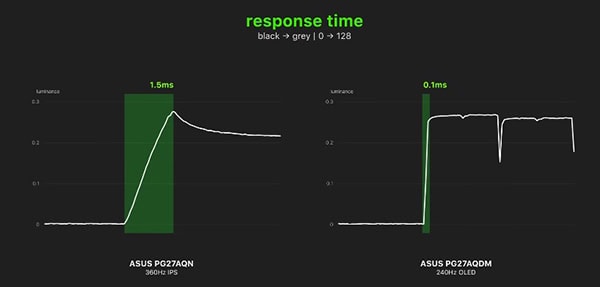
OLED technology is much faster, with near-instant pixel response times that virtually eliminate motion blur. IPS has improved, but its response time is still slower, which can affect high-refresh gaming and fast-motion video.
Viewing Angles
Both IPS and OLED are strong in this category. IPS panels maintain accurate colors up to 178°, but OLED still has the edge because it doesn’t suffer from light leakage or shifts in contrast at extreme angles.
Durability & Burn-In
IPS panels are more durable for long-term use. They don’t suffer from burn-in, making them safer for static content like spreadsheets, signage, or gaming HUDs. OLED carries a risk of image retention or burn-in over time, especially if static elements are displayed frequently.
IPS vs OLED Comparison Table
| Feature | IPS Panel (LCD) | OLED Panel (Self-Emissive) | Winner |
| Contrast & Blacks | Good, but limited by backlight | Perfect blacks, infinite contrast | OLED |
| Color Accuracy | Stable, natural, great for professionals | Vibrant, saturated, excellent for HDR | Tie (depends on use) |
| Brightness | Higher peak brightness, better in bright light | Lower peak brightness, struggles outdoors | IPS |
| Response Time | Slower, some motion blur possible | Near-instant, excellent for gaming | OLED |
| Viewing Angles | Wide, minimal shift | Excellent, even better than IPS | OLED |
| Durability | No burn-in risk, longer lifespan | Burn-in risk over time with static elements | IPS |
| Price | More affordable, widely available | More expensive, limited models | IPS |
| Best For | Office, productivity, signage, budget users | Gaming, home theater, premium indoor displays | Depends |
IPS vs OLED Monitors
Monitors are a major area where buyers face the IPS vs OLED choice.
- IPS Monitors: Best for office work, web browsing, and creative tasks that require consistent color. They are cheaper, available in more models, and have no burn-in concerns.
- OLED Monitors: Best for content creators, gamers, or anyone watching HDR movies. They deliver richer visuals but cost more.
For long-term productivity, IPS may be the smarter option. For high-quality visuals, OLED is unmatched.
IPS vs OLED for Gaming
Gamers often debate whether IPS or OLED is the better choice.
OLED Gaming Advantages:
- Ultra-fast response times and lower input lag.
- Rich colors and deep blacks create immersive visuals.
- High refresh rate OLED monitors are becoming more common.
IPS Gaming Advantages:
- Less risk of burn-in from static gaming HUDs.
- Wide variety of models at different refresh rates and prices.
- More consistent brightness for long sessions.
Conclusion: If immersion and visual fidelity matter most, OLED wins. If durability, budget, and competitive stability matter, IPS still shines.
Resolution Battle: 4K IPS vs 1440p OLED
Many buyers compare 4K IPS monitors with 1440p OLED monitors, since they often fall into the same price range.
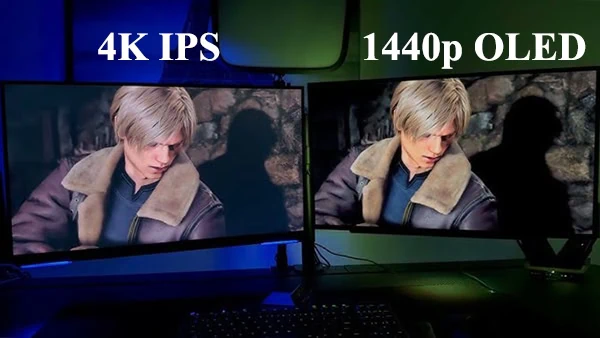
- 4K IPS: More pixels, sharper detail, excellent for productivity and multitasking. However, motion performance isn’t as strong as OLED.
- 1440p OLED: Lower resolution, but superior contrast, speed, and overall image quality. Great for gaming and entertainment.
The choice depends on whether you prioritize sharpness (4K IPS) or visual immersion and speed (1440p OLED).
IPS vs OLED in LED Screen & Commercial Display Context
Beyond consumer electronics, both IPS and OLED are used in commercial LED displays.
- IPS LCD Screens: Common in digital signage, video walls, and advertising where cost-effectiveness and brightness matter. IPS handles long operating hours without degradation.
- OLED Displays: Favored for high-end indoor advertising, creative installations, and luxury venues where picture quality is critical. However, burn-in risk and brightness limits make OLED less suitable for outdoor use.
In the LED display industry, IPS remains the mainstream choice for reliability and affordability, while OLED is reserved for premium, creative projects.
Future Trends: QD-OLED vs IPS and Mini LED Competition
The competition doesn’t stop at IPS vs OLED. Emerging technologies are reshaping the market:
- QD-OLED (Quantum Dot OLED): Improves brightness and color compared to standard OLED, making it more suitable for diverse environments.
- Mini LED with IPS panels: Enhances contrast and brightness, closing the gap with OLED while keeping IPS advantages.
By 2025 and beyond, buyers can expect to see more hybrid solutions that combine IPS reliability with OLED-like performance.
Buyer’s Guide: IPS vs OLED – Which Should You Choose?
Choosing between IPS and OLED depends on how and where you’ll use the display.
- Gamers: OLED for immersion, IPS for competitive play.
- Content creators: IPS for color stability, OLED for HDR visuals.
- Office/professionals: IPS is more cost-effective and durable.
- Businesses: IPS LCD for signage and commercial displays, OLED for premium indoor projects.
Your decision depends on your budget, usage, and environment.
Conclusion
Both IPS and OLED are excellent, but for different reasons. IPS offers value, stability, and brightness, while OLED delivers next-level contrast and speed. Neither is strictly “better” overall—the right choice depends on how you plan to use your display.
As the LED display industry evolves, hybrid solutions like Mini LED and QD-OLED will continue to bridge the gap. For now, weigh your needs carefully, and you’ll know whether IPS or OLED is the smarter option for you. If you’re considering an LED screen solution for your business or project, feel free to reach out to YUCHIP—our team can help you choose the most suitable display.
FAQs
1.Is IPS better than OLED?
Not always—IPS is brighter and more affordable, while OLED offers better contrast and speed.
2.Does OLED last longer than IPS?
No, IPS generally lasts longer. OLED panels can degrade faster due to burn-in risks.
3.Which is better for eyes, IPS or OLED?
Both are safe. OLED may reduce eye strain in dark environments thanks to lower brightness and deeper blacks.
4.Is OLED worth it for monitors in 2025?
Yes, if you value picture quality, HDR, and gaming immersion. IPS may still be better for budget or long office use.
Related Articles You May Like:
IPS vs LED: Key Differences, Advantages & Future Trends
UHD vs OLED: Which Display Technology Is Better for You?
IPS vs LCD: What’s the Difference & Which Should You Choose?
What’s The Science Behind OLED’s Eye-Popping Color Accuracy?
Mini LED vs IPS: Which Display Technology Is Better for You?