
Have you ever stood beneath a massive LED screen that lights up the night sky like digital fireworks?
In 2025, the world’s largest LED screens are bigger, brighter, and more immersive than ever. These giant displays go far beyond advertising — they now define city skylines, stadium experiences, and next-generation cinemas.
From the record-breaking MSG Sphere in Las Vegas to landmark urban LED façades and cinema-grade LED theaters, this guide ranks the top 25 largest LED screens in the world, updated for 2025.
All entries focus on permanent installations, ranked primarily by physical surface area (square meters), with clear details on location, scale, technology, and real-world impact.
With advances in MicroLED and large-format LED engineering, today’s biggest LED screens deliver higher brightness, sharper resolution, and better energy efficiency than ever before. Many have become public landmarks you can visit for free.
So what is the largest LED screen in the world right now — and how close are we to the physical limits of LED display size? Let’s start with a quick overview.
Quick Overview: World’s Largest LED Screens at a Glance (2025)
Here’s a snapshot of the top 10 for easy reference. We’ve ranked them primarily by total physical surface area (m²), while also considering visual impact, architectural integration, and display technology. Temporary event screens are excluded.
| Rank | Screen Name | Location | Area (m² / sq ft) | Category | Why It Matters |
| 1 | MSG Sphere Exosphere | Las Vegas, USA | 54,000 / 580,000 | Spherical LED Exterior | Largest LED surface ever built; 16K skyline visuals |
| 2 | Fremont Street Experience (Viva Vision) | Las Vegas, USA | 12,077 / 130,000 | Overhead LED Canopy | Covers 5 city blocks; immersive nightly shows |
| 3 | Resorts World West Tower | Las Vegas, USA | 9,290 / 100,000 | Media Façade | Hybrid indoor–outdoor casino landmark |
| 4 | King Road Tower Façade | Jeddah, Saudi Arabia | 9,850 / 106,100 | Media Façade | 21-floor wrap with 5M LEDs |
| 5 | Mall Taman Anggrek | Jakarta, Indonesia | 8,000 / 86,000 | Retail Façade | Largest illuminated mall exterior |
| 6 | The Place Sky Screen | Beijing, China | 7,500 / 80,000 | Sky LED Canopy | Plaza-scale immersive advertising |
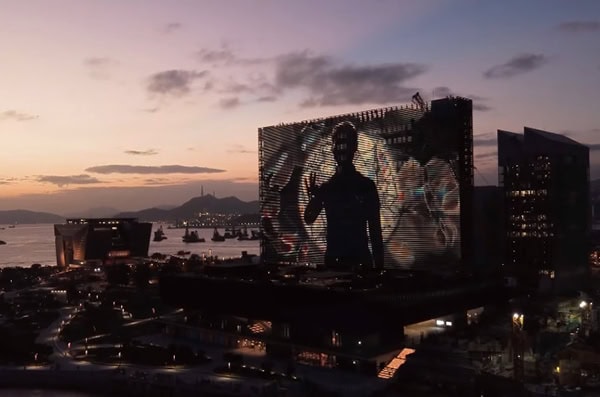
| 7 | M+ Façade | Hong Kong, China | 7,240 / 77,909 | Museum LED Façade | Digital art canvas over Victoria Harbour |
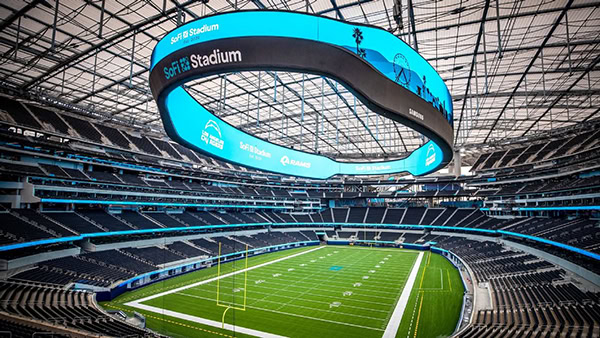
| 8 | SoFi Stadium Halo Board | Inglewood, USA | 6,503 / 70,000 | Stadium LED Ring | 360° viewing with 80M LEDs |
| 9 | Mercedes-Benz Stadium | Atlanta, USA | 5,796 / 62,350 | Stadium Video Display | High-res replays for 70K-seat arena |
| 10 | Tauron Arena Kraków | Kraków, Poland | 5,100 / 54,896 | Arena LED Façade | Curved exterior visible citywide |
What Does “The World’s Biggest LED Screen”Really Mean?
When people search for the world’s biggest screen, they often focus only on size.
In this guide, “biggest screen” refers to permanent large-format visual displays measured primarily by physical surface area (in square meters).
These screens are designed for shared public viewing and are installed in fixed locations such as city landmarks, stadiums, cinemas, and immersive entertainment venues.
The list includes LED, MicroLED, and cinema-grade display systems where size, not technology alone, defines their global ranking. Temporary event screens, touring stage backdrops, and short-term installations are excluded. This definition ensures that all screens listed can be compared fairly using measurable, real-world criteria rather than marketing claims.
It’s also important to note that bigger screens are not always better. Without enough viewing distance, proper pixel pitch, and structural support, increasing size can actually reduce image quality and viewer comfort.
Top 25 Largest LED Screens in the World (2025)
Let’s break it down one by one. Each entry includes size, resolution (where available), and what makes it stand out. These are the biggest LED displays pushing tech limits in public spaces and entertainment.
The following list ranks the world’s biggest screens based on total visible display area, using publicly available data from operators, official press releases, and engineering disclosures.
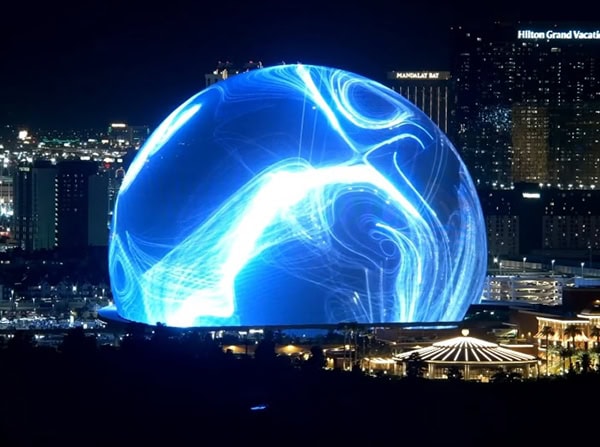
Rank #1 MSG Sphere Exosphere – Las Vegas, USA
- Size: ~54,000 m² (580,000 sq ft)
- Resolution: 16K
- Highlight: This is the largest LED screen in the world for 2025— a glowing sphere that dominates the Vegas skyline. Made of 1.2 million LED pucks, it displays everything from ads to art shows, visible miles away. It’s not just big; it’s a landmark that changes colors and patterns in real-time, drawing crowds nightly.

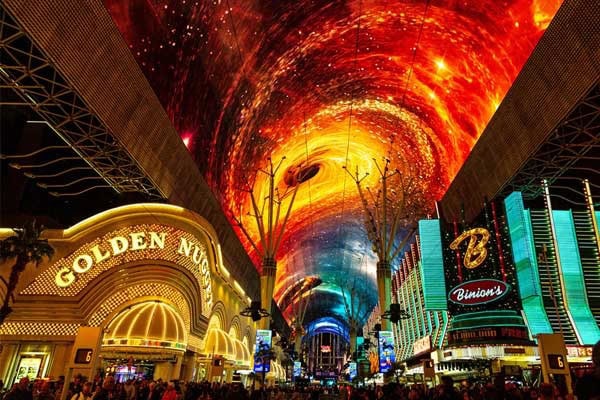
2 Fremont Street Experience (Viva Vision) – Las Vegas, USA
- Size: ~12,077 m² (130,000 sq ft)
- Resolution: 6K
- Highlight: Stretching over five blocks, this overhead canopy turns downtown Vegas into a light party. With synchronized shows featuring music and animations, it’s one of the most fun largest LED screens to experience up close. Walk underneath and feel like you’re in a digital tunnel.
3 Resorts World West Tower – Las Vegas, USA
- Size: ~9,290 m² (100,000 sq ft)
- Resolution: 8K
- Highlight: This hybrid façade blends indoor and outdoor visuals for a casino resort. It’s bright enough to compete with Vegas lights, showing dynamic content that pulls in visitors. One of the newest additions to the largest LED screen rankings.
4 King Road Tower Façade – Jeddah, Saudi Arabia
- Size: ~9,850 m² (106,100 sq ft)
- Resolution: 4K
- Highlight: Wrapping 21 floors, this media wall uses over 5 million LEDs for city branding and events. It’s a shining example of how largest LED screens integrate with architecture in the Middle East.
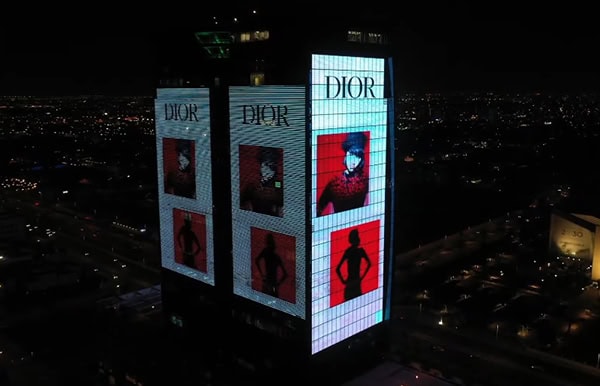
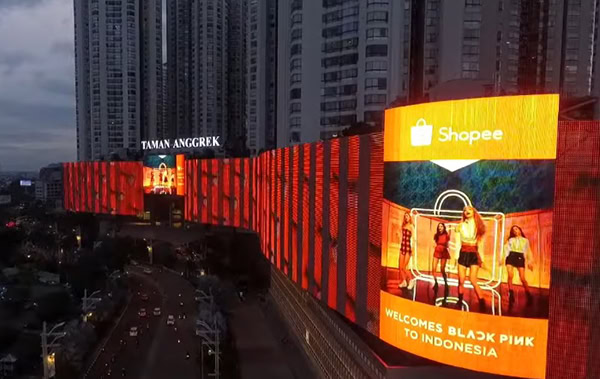
5 Mall Taman Anggrek – Jakarta, Indonesia
- Size: ~8,000 m² (86,000 sq ft)
- Resolution: 4K
- Highlight: The biggest illuminated mall façade in Asia, it lights up shopping districts with ads and art. Perfect for urban vibes in a bustling city.
6 The Place Sky Screen – Beijing, China
- Size: ~7,500 m² (80,000 sq ft)
- Resolution: 4K
- Highlight: Suspended over a plaza, this cluster creates a canopy effect with videos and lights. It’s interactive, responding to crowds below—one of China’s top largest LED screens.
7 M+ Façade – Hong Kong, China
- Size: ~7,240 m² (77,909 sq ft)
- Resolution: 8K
- Highlight: This museum wall turns art into digital spectacles, overlooking Victoria Harbor. A blend of culture and tech in one of the world’s densest cities.
8 SoFi Stadium Halo Board – Inglewood, USA
- Size: ~6,503 m² (70,000 sq ft)
- Resolution: 4K
- Highlight: Suspended like a halo, it offers 360° views with 80 million LEDs. Fans love it for replays during NFL games— a must for sports enthusiasts.
9 Mercedes-Benz Stadium – Atlanta, USA
- Size: ~5,796 m² (62,350 sq ft)
- Resolution: 4K
- Highlight: Wraps the interior for instant stats and excitement in a 71,000-seat venue. One of North America’s largest LED screens for live events.
Many of these stadium installations rely on high-refresh perimeter LED screens designed specifically for live sports environments. For more related information, you can see our stadium LED screen.
10 Tauron Arena Kraków – Kraków, Poland
- Size: ~5,100 m² (54,896 sq ft)
- Resolution: 4K
- Highlight: Curved façade that engages fans inside and out. Europe’s standout for concerts and sports.
11 New Century Global Center – Chengdu, China
- Size: ~4,080 m² (43,916 sq ft)
- Resolution: 4K
- Highlight: Integrated into one of the world’s biggest buildings, it mixes ads with architectural lighting.
12 Dubai Mall Exterior Wrap – Dubai, UAE
- Size: ~3,000 m² (32,292 sq ft)
- Resolution: 4K
- Highlight: Wraps the world’s largest mall with vibrant ads, shining under desert sun.
13 Lotte World Tower Screen – Seoul, South Korea
- Size: ~2,500 m² (26,910 sq ft)
- Resolution: 8K
- Highlight: High-rise display for events, blending with Seoul’s skyline.
14 Times Square NASDAQ Tower – New York, USA
- Size: ~2,000 m² (21,528 sq ft)
- Resolution: 4K
- Highlight: Iconic for stock tickers and ads in the heart of NYC.
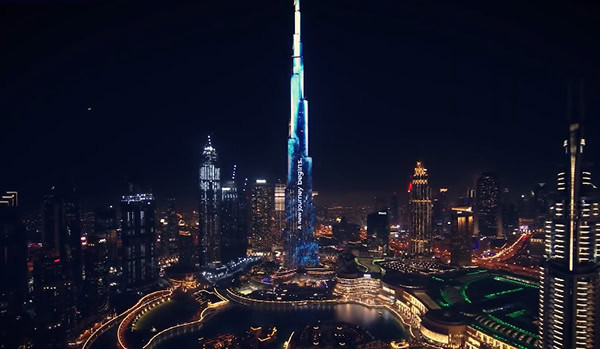
15 Burj Khalifa LED Display – Dubai, UAE
- Size: ~1,800 m² (19,375 sq ft)
- Resolution: 4K
- Highlight: On the tallest building, used for New Year’s fireworks projections.
16 Citi Tower LED Façade – Hong Kong, China
- Size: ~1,500 m² (16,146 sq ft)
- Resolution: 4K
- Highlight: Financial district glow with market data and lights.
17 Sogo Department Store Façade – Hong Kong, China
- Size: ~1,359 m² (14,630 sq ft)
- Resolution: 4K
- Highlight: Busy shopping area billboard for high-traffic ads.
These urban landmark screens often function as media façades, combining architectural design with outdoor LED display technology.
18 Hydroproject Building – Beijing, China
- Size: ~1,200 m² (12,917 sq ft)
- Resolution: 4K
- Highlight: Engineering-themed displays on a landmark structure.
19 MSG Sphere Interior (Concert & Immersive Shows) – Las Vegas, USA
- Size: ~14,864 m² (160,000 sq ft)
- Resolution: 16K
- Highlight: Wraparound for concerts and films, creating a digital planet feel. This transitions us to cinema—more on that below.
Largest LED Screens in Immersive Cinema: The Future of Movie Experiences
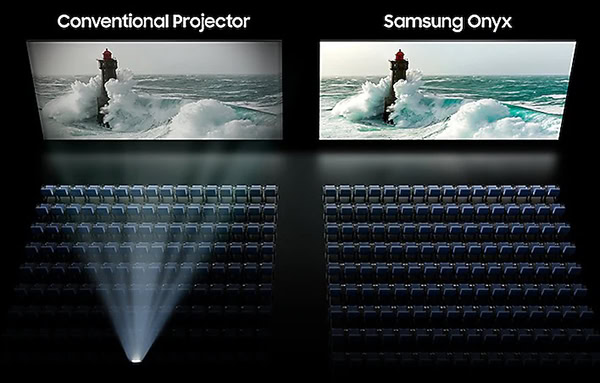
Beyond urban giants, LED tech is revolutionizing movies. Traditional projectors are giving way to direct-view LED screens, offering brighter images, better contrast, and no bulb burnouts. In 2025, these are the largest LED screens pushing cinema boundaries.
20 MSG Sphere Interior (Cinema Mode) – Las Vegas, USA
- Size: ~14,864 m² (160,000 sq ft)
- Resolution: 16K
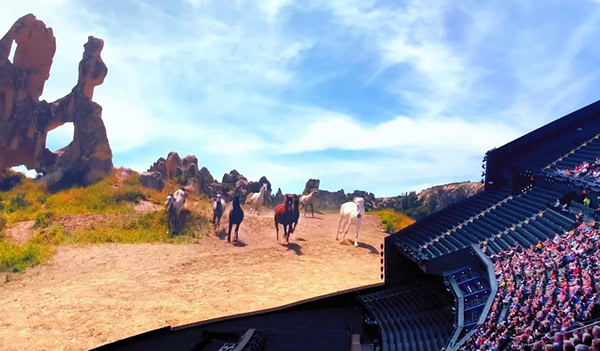
- Highlight: Used for films like “Postcard from Earth,” it wraps audiences in 360° Far beyond standard theaters, it’s the largest LED screen for immersive storytelling.
21 Samsung Onyx Cinema LED – Various Locations (e.g., Beijing, China)
- Size: ~140 m² (1,507 sq ft) per screen
- Resolution: 4K HDR
- Highlight: Replaces projectors with vivid, uniform colors. Every seat feels premium—perfect for blockbusters.
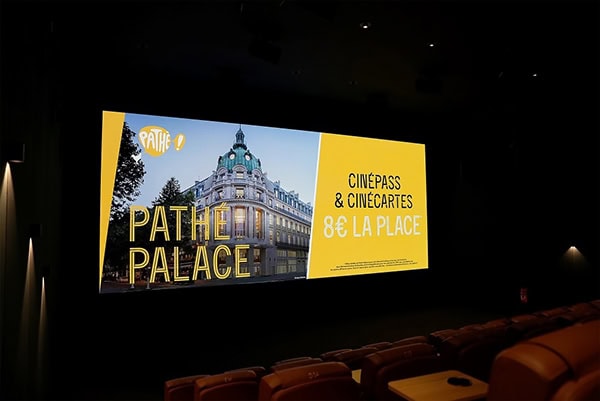
22 Samsung Onyx (Paris Pathé Palace) – Paris, France
- Size: ~126 m² (1,356 sq ft)
- Resolution: 4K HDR
- Highlight: In a historic cinema, it enhances classics with modern tech.
23 Other Samsung Onyx Installations – Global
- Size: ~100-140 m²
- Resolution: 4K
- Highlight: Expanding worldwide, these screens make movies pop with high contrast.
For comparison, traditional setups still shine:
24 Traumpalast Leonberg IMAX – Leonberg, Germany
- Size: ~815 m² (8,773 sq ft)
- Resolution: Laser Projection
- Highlight: World’s largest permanent projection screen, enveloping viewers in massive films.
25 Other IMAX Hybrids – Global
- Size: ~500-800 m²
- Resolution: Varies
- Highlight: Blending projection with LED edges for hybrid immersion.
If you’re wondering how these new LED cinema screens compare to classic 3D and IMAX experiences in terms of immersion, depth, and overall viewing quality, check out our detailed guide: 3D vs IMAX: Which is better for your next movie?
LED cinema screens beat traditional ones in brightness (up to 300 nits vs. 48) and longevity, making them ideal for 2025’s high-demand theaters.
Behind the Largest LED Screen: Tech Trends in 2025
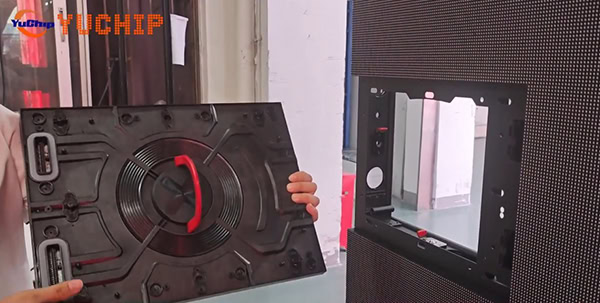
How do these largest LED screens get built? Engineers use modular panels—like giant Lego pieces—that snap together on steel frames. Pixel pitch (distance between LEDs) is key: smaller for sharp indoor views, larger for outdoor durability.
In 2025, trends include MicroLED for 20% better efficiency, AI for auto-adjusting brightness based on crowds, and solar integration to cut energy use by 35%. These make the biggest LED displays smarter and greener, from wind-resistant façades to lag-free 8K servers.
Why Bigger Screens Are Rare
If display technology keeps advancing, why don’t we see even bigger screens everywhere? The answer lies in engineering, cost, and urban constraints, not imagination.
First, ultra-large screens place enormous demands on structural support. A display covering thousands of square meters can weigh hundreds of tons, requiring custom steel frameworks and deep foundations.
Second, heat dissipation becomes a serious challenge. Millions of LEDs operating at high brightness generate significant thermal load, which must be managed without compromising performance or safety.
Energy consumption is another limiting factor. Outdoor mega-screens often operate at 5,000–10,000 nits to remain visible in daylight, pushing power infrastructure to its limits.
Finally, viewing distance and city regulations restrict where such screens can be built. Without enough space for audiences to stand far back, a bigger screen does not always improve the viewing experience.
For these reasons, the world’s biggest screens tend to appear only in locations where scale, infrastructure, and audience flow align perfectly.
FAQs About the World’s Largest LED Screens
Common Questions About the World’s Largest LED Screens
1.What is the largest LED screen in the world in 2025?
The largest LED screen in the world in 2025 is the MSG Sphere Exosphere in Las Vegas, covering approximately 54,000 square meters. It wraps the entire exterior of the spherical structure and features ultra-high-resolution visuals visible from miles away, making it the biggest permanent LED display ever built.
2.How are the world’s biggest screens measured?
The world’s biggest screens are typically measured by total display surface area, expressed in square meters. Other factors such as resolution, brightness, and shape matter for performance, but physical area is the most objective metric when ranking the largest screens globally.
3.Is the biggest screen always an LED screen?
Today, yes. Nearly all of the world’s largest permanent screens use LED or MicroLED technology. Traditional projection systems struggle to reach the brightness, durability, and scale required for outdoor or mega-sized installations, especially in daylight conditions.
4.What’s the difference between the biggest LED screen and the biggest cinema screen?
The biggest LED screens are usually public-facing displays on buildings, plazas, or stadiums, designed for large crowds and outdoor visibility. The biggest cinema screens focus on image immersion and viewing angles, often indoors, and may use either LED or advanced projection systems.
5.Why don’t cities build even bigger LED screens?
Building ultra-large screens is limited by structural load, heat management, power supply, viewing distance, and city regulations. Beyond a certain size, a bigger screen does not improve the viewing experience unless the surrounding environment is designed to support it.
6.How bright are the world’s largest outdoor LED screens?
Most of the largest outdoor LED screens operate between 5,000 and 10,000 nits, allowing clear visibility in direct sunlight. Brightness is automatically reduced at night to save energy and prevent light pollution.
7.What resolution do the biggest LED screens have?
Resolution varies depending on viewing distance and pixel pitch. The world’s biggest LED screens often reach 8K to 16K equivalent resolution, with tens or even hundreds of millions of individual LEDs working together as a single display surface.
8.Are the world’s biggest LED screens permanent installations?
Most of them are permanent or semi-permanent structures integrated into buildings, stadiums, or landmarks. Temporary event screens can be very large, but they are usually excluded from global “biggest screen” rankings due to their short lifespan.
9.Can the public visit the world’s largest LED screens?
Yes. Many of the world’s largest LED screens are free to view and located in public spaces such as city centers, entertainment districts, and stadium exteriors. Some interior screens, like cinema or concert venues, require a ticket.
10.How much does a giant LED screen cost?
Costs vary widely depending on size, pixel pitch, and location. Large outdoor LED screens typically range from $500 to $1,500 per square meter, while record-breaking installations can cost tens or even hundreds of millions of dollars when structure and infrastructure are included.
Conclusion: Why These Largest LED Screens Matter in 2025
From the largest LED screen in Las Vegas to cinema game-changers, these displays bring people together through light and innovation. They turn ordinary spaces into wonders, boosting tourism and entertainment. As 2025 pushes tech further, expect even bigger impacts.
For custom LED solutions inspired by these giants—from stadiums to cinema upgrades—leading providers like YUCHIP offer tailored projects. Explore options here: YUCHIP Custom LED Display Solutions.
Sources & References
- List of largest video screens – Wikipedia: https://en.wikipedia.org/wiki/List_of_largest_video_screens
MSG Sphere Facts & Figures – Wikipedia sphere (2025 data): https://en.wikipedia.org/wiki/Sphere_(venue) - Samsung Onyx Cinema LED – Samsung press release: https://news.samsung.com/global/samsung-unveils-new-onyx-at-cinemacon-2025-setting-new-standards-for-led-cinema-innovation
- M+ Museum Media Façade – M+ Official Website: https://www.mplus.org.hk/en/magazine/mplus-building-hong-kong-showcases-art-on-led-facade/
Related Articles You May Like:
3D vs IMAX: Which Is Better for Your Next Movie?
Giant Screen vs IMAX: Detailed Comparison
About Cinema LED Screen: All You Need To Know